
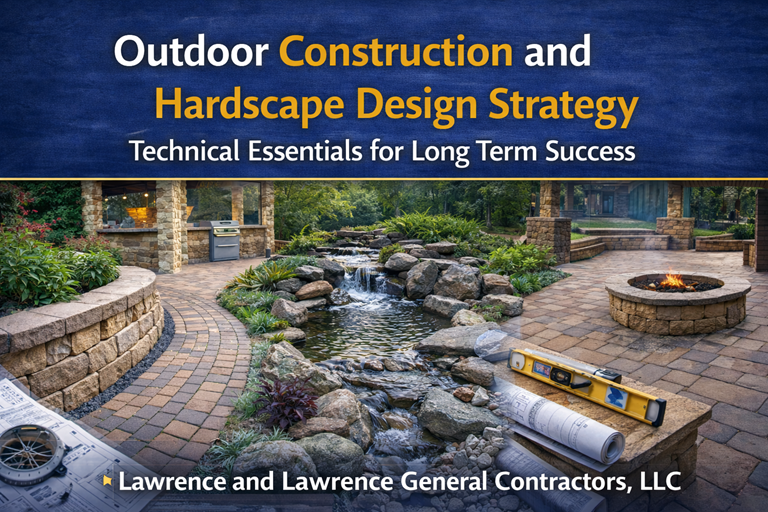
Outdoor construction and hardscape design strategy plays a critical role in extending usable living space, improving property value, and strengthening long term site performance. Landscaping is not simply aesthetic enhancement. When properly engineered and constructed, it integrates drainage control, soil stability, structural hardscape elements, and environmental responsiveness.
In Memphis, TN, outdoor construction must account for seasonal rainfall patterns, soil expansion characteristics, grading requirements, and municipal permitting standards. Lawrence and Lawrence General Contractors, LLC approaches exterior development with the same structural discipline applied to residential and commercial construction projects.
Site Evaluation and Planning Controls
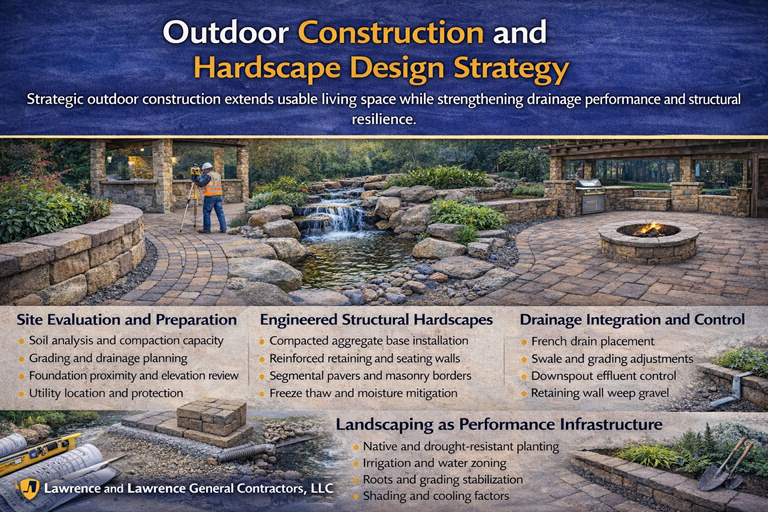
Effective outdoor construction begins with technical assessment rather than decorative selection. Before introducing hardscape elements, the following must be evaluated:
• Soil composition and compaction capacity
• Existing drainage patterns and runoff flow
• Elevation differentials across the site
• Proximity to foundations and slab edges
• Utility locations and setback requirements
Improper grading can result in moisture intrusion, foundation stress, and premature material failure. Outdoor work must integrate with the building envelope rather than compete with it.
The United States Environmental Protection Agency provides guidance on stormwater management and runoff control standards that influence many municipal policies:
https://www.epa.gov/npdes
Structural Hardscape Foundations
Hardscape features such as patios, retaining walls, and walkways require engineered subgrade preparation. Surface materials alone do not determine durability. Performance depends on base thickness, compaction, and drainage layering.
Common structural hardscape systems include:
• Reinforced concrete patios
• Interlocking paver systems with compacted aggregate base
• Segmental retaining walls with geogrid reinforcement
• Masonry seating walls
• Exterior stair systems
Each system must be evaluated for load bearing requirements, freeze thaw movement, and water displacement management. Failure to account for these factors leads to cracking, settlement, and surface separation.
Drainage Integration and Moisture Control
Outdoor construction frequently impacts foundation moisture exposure. A comprehensive outdoor construction and hardscape design strategy includes:
• French drain systems
• Swales and grading adjustments
• Downspout extensions
• Permeable surface solutions
• Retaining wall weep systems
Water management protects both structural components and landscaping investments. Exterior improvements should never redirect runoff toward foundations or neighboring properties.
Functional Outdoor Living Construction
Beyond structural stability, outdoor construction can extend livable square footage. Exterior living areas should be treated as engineered extensions of the home.
Examples include:
• Covered patios with structural framing
• Outdoor kitchens with utility integration
• Fire features with proper clearances
• Pergolas with anchored footings
• Screened enclosures
Electrical, plumbing, and gas installations in outdoor environments require code compliance and inspection coordination. Structural tie ins to existing buildings must account for load transfer and moisture isolation.
Learn more about our Residential Construction services:
https://www.lawrenceandlawrencegc.com/services/residential-construction/
Landscaping as Performance Infrastructure
Plant selection is often treated as a visual decision. However, landscaping contributes to soil stabilization, shading efficiency, and erosion control.
Key considerations include:
• Native species suited to regional climate
• Root systems that avoid foundation interference
• Drought tolerant planting strategies
• Irrigation system zoning
• Long term maintenance planning
Strategic planting can reduce surface heat exposure, lower cooling loads, and enhance property value when integrated with structural design.
Exterior Lighting and Safety Planning
Outdoor lighting must balance safety, energy efficiency, and aesthetic integration. Well designed systems include:
• Pathway illumination
• Architectural accent lighting
• Step and elevation safety lighting
• Low voltage landscape lighting
• Photocell and timer controls
Lighting design should avoid glare while maintaining visibility for ingress and egress routes.
Regulatory and Permit Considerations
Certain hardscape and exterior improvements require permitting, especially when altering structural elements, drainage pathways, or utility systems. Retaining walls above specified heights, structural roof extensions, and exterior kitchens often fall under inspection requirements.
Outdoor construction and hardscape design strategy must align with local building codes and zoning regulations to prevent enforcement issues or resale complications.
Learn more about our Commercial Construction capabilities:
https://www.lawrenceandlawrencegc.com/services/commercial-construction/
Long Term Durability and Lifecycle Planning
Exterior improvements are continuously exposed to environmental stress. Material selection should account for:
• UV exposure
• Temperature fluctuation
• Moisture saturation
• Soil expansion
• Load bearing capacity
Concrete mix design, joint spacing, reinforcement placement, and sealant selection directly affect lifecycle performance.
A properly constructed hardscape system can deliver decades of structural reliability when engineered and installed with discipline.
Strategic Outdoor Development
Outdoor construction and hardscape design strategy should never be reduced to decorative upgrades alone. It represents a structural investment in property performance, site resilience, and expanded usability.
Lawrence and Lawrence General Contractors, LLC integrates structural planning, drainage engineering, regulatory alignment, and durable material selection to deliver exterior environments that function as extensions of the built structure.
Well planned outdoor construction enhances both aesthetic value and structural protection, ensuring that exterior improvements perform as reliably as the building itself.