


Open floor plan benefits for modern homes extend beyond aesthetics. Removing interior partitions affects structural framing, load transfer, ventilation patterns, lighting distribution, and overall building performance. In Memphis, TN, many older homes were constructed with compartmentalized layouts. Converting these designs into open floor plans requires disciplined structural evaluation and code-compliant execution.
Open floor plan benefits for modern homes are most effective when engineering oversight, structural reinforcement, and system coordination are addressed before demolition begins. Lawrence and Lawrence General Contractors, LLC approaches open concept renovations through structured planning rather than cosmetic alteration.

Structural Evaluation Before Wall Removal
Open layouts often require removing interior walls. Before modification, it is critical to determine whether a wall is load-bearing.
Key Structural Considerations
• Load path analysis
• Header beam sizing
• Foundation load capacity
• Ceiling joist direction
• Mechanical and electrical routing
Improper wall removal can compromise structural integrity. Reinforcement strategies such as engineered beams or column supports must align with Tennessee building code requirements.
For larger scope reconfigurations, evaluation may fall under Residential Construction services:
https://www.lawrenceandlawrencegc.com/services/residential-construction/
Enhanced Social Interaction and Sightlines
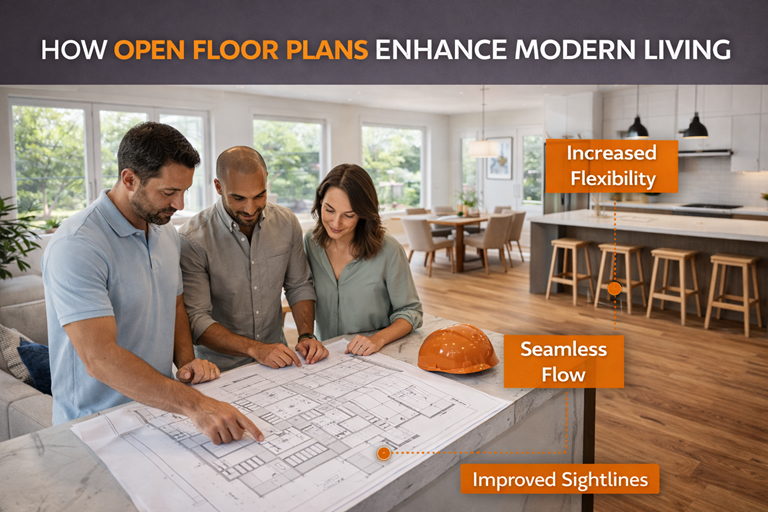
One of the primary open floor plan benefits for modern homes is improved connectivity between spaces. Kitchens, living areas, and dining rooms become visually and functionally integrated.
Design Advantages
• Clear sightlines across activity zones
• Improved family interaction
• Easier supervision of children
• Greater engagement during gatherings
Structural openness supports both functionality and lifestyle flexibility.
Natural Light Distribution and Airflow
Walls restrict light penetration and airflow circulation. Removing barriers improves natural illumination and ventilation.
Performance Improvements
• Reduced need for artificial lighting
• Increased daylight penetration
• Improved cross ventilation
• Reduced shadowed zones
Energy efficiency guidance from the U.S. Department of Energy emphasizes daylight optimization as part of overall building performance planning:
https://www.energy.gov/energysaver
Spatial Efficiency and Flexibility
Open floor plan benefits for modern homes include improved spatial perception. Even modest square footage can appear larger when partitions are removed.
Flexible Layout Applications
• Multi-use seating areas
• Combined dining and kitchen spaces
• Home office integration
• Adaptable furniture arrangements
Design flexibility supports changing household needs without structural expansion.
Entertainment and Circulation Flow
Open layouts improve circulation patterns and guest movement during events.
Circulation Benefits
• Reduced bottlenecks
• Direct transitions between zones
• Improved accessibility
• Better furniture arrangement options
Flow planning must account for HVAC registers, structural beams, and lighting placement to maintain performance balance.
Resale Value Considerations
Market demand increasingly favors open concept layouts. Many buyers prioritize visibility and shared spaces over compartmentalized rooms.
Open floor plan benefits for modern homes often include:
• Increased buyer appeal
• Perceived square footage expansion
• Modern design alignment
However, structural modifications must be documented and permitted to protect resale integrity.
Mechanical, Electrical, and Code Coordination
Open concept renovations often require relocation of lighting, plumbing lines, HVAC ducts, and electrical wiring.
Systems Coordination
• Load calculations for HVAC
• Lighting redistribution
• Outlet relocation
• Fire separation compliance
Local permitting and inspection processes must be followed to ensure safety and compliance.
Guidance on structural and safety standards can be referenced through the International Code Council:
https://www.iccsafe.org/
When Professional Oversight Is Required
Open floor plan benefits for modern homes depend on proper structural reinforcement and system integration. Projects involving:
• Beam installation
• Column reinforcement
• Structural header upgrades
• Utility rerouting
require licensed contractor oversight.
Commercial or mixed-use reconfigurations may align with Commercial Construction standards:
https://www.lawrenceandlawrencegc.com/services/commercial-construction/
Strategic Open Concept Planning
Open floor plan benefits for modern homes are maximized when engineering discipline supports architectural vision. Structural analysis, beam sizing, load distribution, and code compliance must precede demolition.
Lawrence and Lawrence General Contractors, LLC integrates structural evaluation, permit coordination, and construction sequencing to ensure safe and compliant open concept transformations.
Properly executed open layouts enhance long-term property value, functional flow, and modern design appeal while preserving structural integrity.
For consultation or renovation planning:
Lawrence and Lawrence General Contractors, LLC
901-750-1000
Available via call or WhatsApp
Info@LandLGC.com