
Delaying roof replacement risks homeowners face often begin subtly. A few missing shingles or minor discoloration may seem harmless at first. However, roofing systems protect structural framing, insulation layers, and interior finishes. When deterioration advances, the consequences rarely remain isolated to the roof surface alone.
In Memphis, TN, seasonal humidity, heavy rainfall, and temperature shifts accelerate material wear. Therefore, delaying roof replacement risks homeowners face can quickly expand from cosmetic concerns to structural compromise. Lawrence and Lawrence General Contractors, LLC evaluates roofing systems with attention to structural integrity, energy performance, and long-term property protection.
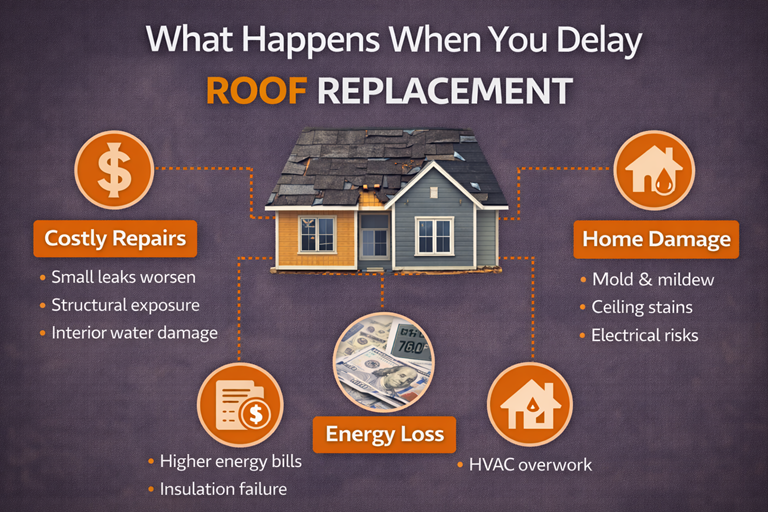
Escalating Repair Costs and Structural Exposure
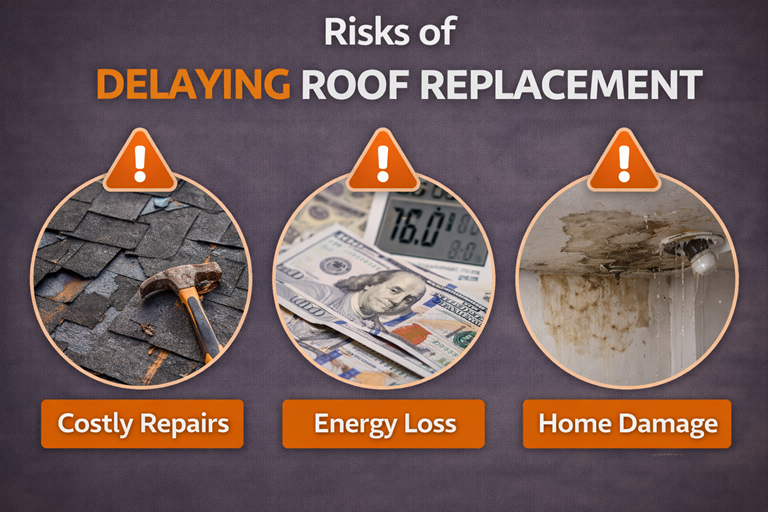
One of the most immediate delaying roof replacement risks homeowners face is rising repair cost. While minor damage may appear manageable, roofing materials degrade progressively.
How Small Issues Multiply
• Minor leaks expand across decking surfaces
• Moisture penetrates underlayment layers
• Sheathing weakens from prolonged exposure
• Fastener systems loosen
As water infiltrates roof decking, structural framing becomes vulnerable. Consequently, what begins as shingle replacement can evolve into partial deck reconstruction. Additionally, ceiling stains, insulation damage, and mold development increase interior repair expenses.
The Federal Emergency Management Agency outlines moisture intrusion risks and building envelope protection guidance:
https://www.fema.gov/
Timely roof replacement prevents secondary structural repairs and protects interior finishes.
Reduced Energy Efficiency and HVAC Strain
Another delaying roof replacement risk homeowners face involves compromised thermal performance. Roofing systems contribute significantly to insulation efficiency and ventilation balance.
Energy Performance Impact
• Air leakage through degraded flashing
• Insulation saturation from moisture
• Ventilation imbalance in attic space
• Increased HVAC runtime
As insulation becomes damp, its R-value decreases. Therefore, heating and cooling systems must operate longer to maintain indoor comfort. Over time, elevated utility costs compound the financial impact of postponement.
The U.S. Department of Energy provides guidance on attic insulation and roof ventilation efficiency:
https://www.energy.gov/energysaver
Replacing an aging roof with modern materials improves airflow regulation and long-term energy stability.
Interior Damage and Moisture Migration
Roof deterioration does not remain confined to the exterior. Instead, moisture migrates downward, affecting interior assemblies.
Common Interior Consequences
• Ceiling staining
• Drywall deterioration
• Mold growth
• Electrical risk near saturated wiring
Furthermore, prolonged moisture exposure can compromise framing connections and create long-term structural weakening. Therefore, delaying roof replacement risks homeowners face often extend beyond visible symptoms.
Routine inspection and timely intervention reduce interior remediation costs.
Diminished Curb Appeal and Market Position
A visibly aging roof immediately affects exterior presentation. Consequently, delaying roof replacement risks homeowners face include reduced buyer confidence and appraisal scrutiny.
Market Related Impact
• Visible shingle curling or granule loss
• Discoloration and algae streaking
• Inspection contingencies during resale
• Lower buyer negotiation leverage
In competitive real estate markets, roof condition frequently influences first impressions. Additionally, lenders may require roof replacement before closing if inspection findings indicate end-of-life materials.
Learn more about Residential Construction services:
https://www.lawrenceandlawrencegc.com/services/residential-construction/
Insurance and Liability Exposure
Insurance carriers evaluate roof condition when underwriting or renewing policies. An aging roof increases the likelihood of claim denial or premium increases.
Insurance Concerns
• Denied water damage claims
• Higher deductibles
• Limited coverage eligibility
Therefore, proactive roof replacement protects not only structural components but also financial security.
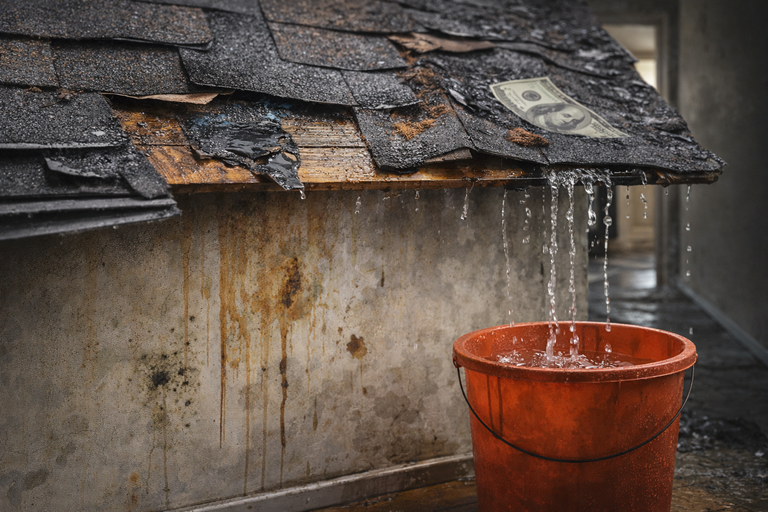
Long-Term Structural Preservation
Delaying roof replacement risks homeowners face ultimately center on one issue: moisture control. Roofing systems function as the primary barrier between environmental exposure and structural framing.
Modern roofing materials offer improved underlayment technology, enhanced shingle durability, and better ventilation integration. Consequently, replacing a failing roof preserves framing stability, insulation integrity, and long-term property performance.
Lawrence and Lawrence General Contractors, LLC evaluates roof decking, flashing systems, ventilation pathways, and moisture exposure before recommending replacement. This disciplined assessment ensures structural continuity and code compliance.
Regular inspection combined with timely replacement prevents escalating repair costs, protects interior finishes, and maintains long-term property value.
For consultation:
Lawrence and Lawrence General Contractors, LLC
901-750-1000
Available via call or WhatsApp
Info@LandLGC.com