

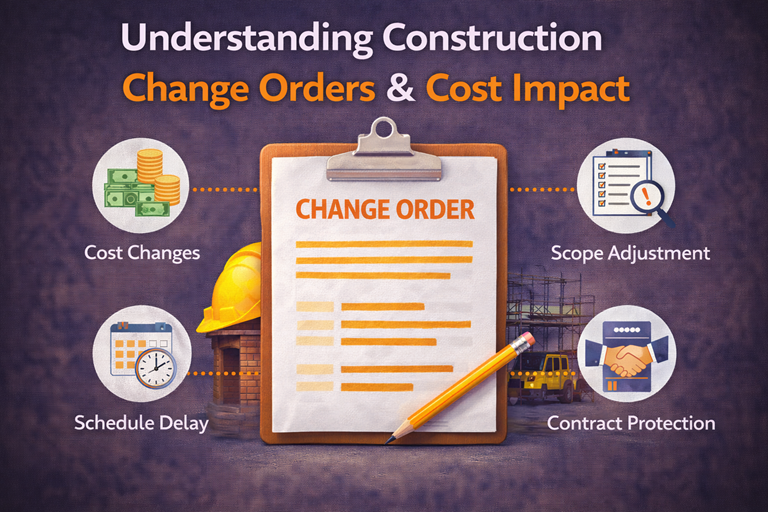
Understanding construction change orders and cost impact is essential for homeowners and property owners planning renovation, commercial build-outs, or new construction. While most projects begin with a defined scope and budget, adjustments often occur after work has started. Therefore, knowing how change orders function protects both financial stability and structural continuity.
In Memphis, TN, material availability, inspection requirements, design clarifications, and site conditions frequently influence project adjustments. Because of this, understanding construction change orders and cost impact allows owners to make informed decisions without disrupting timelines or budgets. Lawrence and Lawrence General Contractors, LLC manages change orders through documented review, pricing transparency, and schedule evaluation to prevent confusion or cost escalation.
What Is a Construction Change Order
A construction change order is a written modification to the original contract scope. It may adjust materials, quantities, layout, structural elements, or system specifications. Although some changes are owner requested, others result from site discoveries or code requirements.
Common examples include:
• Upgrading finish materials
• Modifying floor plan layout
• Addressing hidden structural damage
• Updating electrical or plumbing routing
• Adjusting for permitting requirements
Because construction is sequential, even small scope changes can affect downstream scheduling. Consequently, every change should be evaluated for both direct and indirect cost impact.
Why Change Orders Occur
Understanding construction change orders and cost impact begins with recognizing why they happen. In many cases, unforeseen conditions surface only after demolition or excavation begins.
Typical causes include:
• Subsurface moisture or soil instability
• Framing deficiencies discovered during renovation
• Outdated wiring or plumbing
• Design clarifications after walkthrough review
• Material backorders requiring substitution
For example, during remodeling, removing drywall may reveal structural damage. As a result, reinforcement may be required before finishes continue. Although unexpected, addressing such issues early protects long-term structural performance.
The National Institute of Building Sciences provides guidance on construction risk and project documentation:
https://www.nibs.org/
Financial Impact of Construction Change Orders
Change orders affect more than material cost alone. Therefore, understanding construction change orders and cost impact requires evaluating multiple variables.
Direct Cost Factors
• Additional labor hours
• Material price differences
• Equipment rental adjustments
• Inspection re-scheduling
Indirect Cost Factors
• Timeline extension
• Trade rescheduling
• Temporary site protection
• Administrative documentation
While some changes increase cost, others may reduce expenses if substitutions are value engineered. However, every modification should be reviewed in writing before approval.
Schedule Adjustments and Timeline Control
Construction sequencing depends on milestone coordination. Because trades operate in defined order, even minor modifications may affect workflow.
For example:
• Electrical changes may delay drywall installation
• Structural revisions may impact roofing schedule
• Material substitutions may alter delivery timing
Therefore, documented timeline updates prevent unrealistic completion expectations. Clear communication maintains alignment between owner and contractor.
Learn more about structured project planning under Commercial Construction services:
https://www.lawrenceandlawrencegc.com/services/commercial-construction/
How to Evaluate a Change Order
Understanding construction change orders and cost impact also means knowing how to review one properly.
When presented with a change order, owners should confirm:
• Scope description is clearly defined
• Cost breakdown is itemized
• Timeline impact is stated
• Permit implications are addressed
• Inspection sequencing is updated
Additionally, written approval should precede execution. Verbal adjustments often lead to confusion and payment disputes.
Preventing Unnecessary Change Orders
Although some changes are unavoidable, careful planning reduces frequency. Preconstruction walkthroughs, moisture testing, structural inspections, and detailed drawings minimize uncertainty.
Prevention strategies include:
• Thorough design documentation
• Material availability verification
• Clear allowance definitions
• Contingency budget allocation
• Early permitting coordination
The U.S. Small Business Administration outlines project budgeting strategies that support contingency planning:
https://www.sba.gov/
By allocating contingency funds, owners protect themselves from financial strain if adjustments arise.
Change Orders and Contract Protection
Contracts should define how change orders are processed. This typically includes documentation format, pricing structure, approval requirements, and payment timing.
Without a clear process, misunderstandings may occur. Therefore, written documentation safeguards both parties and preserves contractual clarity.
Learn more about Residential Construction services:
https://www.lawrenceandlawrencegc.com/services/residential-construction/

Strategic Construction Oversight
Ultimately, understanding construction change orders and cost impact improves project control. Change orders are not inherently negative. Instead, they are structured tools that allow projects to adapt while maintaining documentation integrity.
Lawrence and Lawrence General Contractors, LLC manages change orders through detailed scope clarification, transparent pricing review, and updated schedule coordination. By maintaining documentation discipline, project adjustments remain controlled rather than disruptive.
Construction projects involve complexity. However, informed decision making ensures structural integrity, regulatory compliance, and financial stability remain intact.
For consultation:
Lawrence and Lawrence General Contractors, LLC
901-750-1000
Available via call or WhatsApp
Info@LandLGC.com