

Home remodeling myths every owner should ignore continue to circulate, often shaping decisions before a project even begins. In Memphis, TN, remodeling is not simply cosmetic improvement. It involves structural evaluation, permitting compliance, mechanical coordination, and market awareness. Unfortunately, misconceptions can distort expectations and create avoidable risk.
Understanding home remodeling myths every owner should ignore allows property owners to approach renovation strategically rather than emotionally. Lawrence and Lawrence General Contractors, LLC structures remodeling projects around planning discipline, code alignment, and long-term performance.
Why Remodeling Myths Matter
Before examining specific misconceptions, it is important to understand the impact of misinformation. Remodeling affects load paths, electrical capacity, plumbing venting, insulation performance, and resale positioning. Therefore, decisions made under false assumptions can produce structural problems, inspection failures, or financial overruns.
Additionally, Tennessee building standards follow nationally recognized frameworks such as the International Code Council:
https://www.iccsafe.org/
Because compliance is not optional, clarity at the beginning of a project protects progress later.
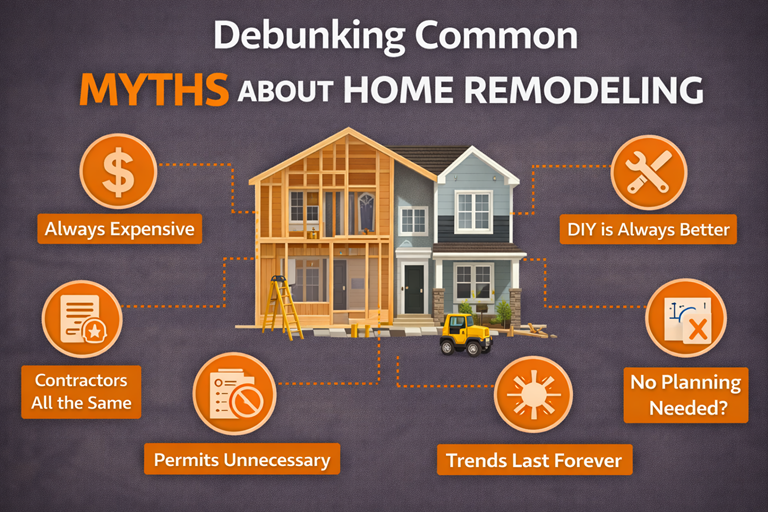
Myth 1: Remodeling Is Always Expensive
Many homeowners assume that remodeling automatically requires a massive financial commitment. In reality, cost is determined by scope definition and sequencing.
Budget Control Strategies
• Targeted upgrades instead of full demolition
• Phased scheduling to distribute expenses
• Material selection aligned with performance goals
• Retention of structurally sound components
For example, cabinet refinishing can transform a kitchen without full replacement. Likewise, lighting modernization can redefine a space without altering structural framing. Consequently, remodeling can scale to realistic budget parameters when planning is intentional.
Myth 2: DIY Always Saves Money
While minor cosmetic tasks may be manageable, structural, electrical, and plumbing modifications require licensed expertise. Attempting complex changes without proper knowledge often increases total cost.
Where DIY Becomes Risky
• Improper beam sizing
• Electrical overload conditions
• Plumbing code violations
• Failed inspections
Furthermore, insurance carriers may deny claims tied to unlicensed structural alterations. The Tennessee Department of Commerce and Insurance outlines contractor licensing requirements:
https://www.tn.gov/commerce/regboards/contractors.html
Professional oversight protects both safety and property value.
Myth 3: Remodeling Does Not Require Planning
Some believe remodeling decisions can evolve during construction. However, undefined scope frequently leads to change orders and scheduling delays.
Planning Requirements
• Written scope documentation
• Permit identification
• Timeline sequencing
• Budget forecasting
• Material procurement coordination
Without these controls, progress slows and costs increase. In contrast, structured planning improves efficiency and inspection readiness.
Learn more about Residential Construction services:
https://www.lawrenceandlawrencegc.com/services/residential-construction/
Myth 4: All Contractors Deliver Similar Results
Contractor selection directly influences quality and compliance. Experience, insurance coverage, project supervision, and code familiarity vary significantly between firms.
Evaluation Criteria
• Active state licensing
• Verified insurance coverage
• Documented project portfolio
• Clear contract structure
• Local inspection experience
Selecting solely based on price often sacrifices oversight discipline. Instead, contractor evaluation should focus on structural expertise and regulatory knowledge.
Myth 5: Permits Are Rarely Necessary
Permit requirements extend beyond major additions. Electrical panel upgrades, structural beam installation, exterior structural changes, and plumbing rerouting frequently require inspection approval.
Consequences of Skipping Permits
• Municipal fines
• Stop work orders
• Resale complications
• Insurance conflicts
Therefore, permit verification should occur before demolition begins.
Myth 6: Remodeling Guarantees Immediate Value
Although remodeling can improve property appeal, not every upgrade produces strong return on investment. Market conditions and neighborhood standards influence resale performance.
Market Sensitive Improvements
• Functional kitchen layouts
• Modernized bathrooms
• Energy efficiency upgrades
• Structural layout optimization
The U.S. Department of Energy highlights energy performance improvements as long-term cost reduction measures:
https://www.energy.gov/energysaver
Strategic upgrades outperform trend-driven cosmetic modifications.
Myth 7: Design Trends Are Timeless
Design preferences evolve quickly. Consequently, remodeling based solely on current trends may shorten long-term relevance.
Long-Term Design Approach
• Neutral foundational finishes
• Durable materials
• Flexible layout configurations
• Balanced architectural detailing
A long-term remodeling mindset protects resale potential and reduces future redesign costs.
Structural Discipline Over Assumptions
Home remodeling myths every owner should ignore often minimize the technical realities of renovation. Wall removal changes load transfer. Plumbing relocation impacts venting systems. Electrical upgrades affect panel capacity. Therefore, remodeling must begin with structural evaluation rather than demolition.
Lawrence and Lawrence General Contractors, LLC integrates engineering awareness, permit coordination, timeline management, and transparent budgeting into every renovation phase. When homeowners replace myths with structured planning, remodeling becomes predictable, compliant, and durable.